

The signs are often there long before you admit something is wrong.
Most people who end up in burnout did not arrive there suddenly. They pushed through warning signs. They rationalised the exhaustion as temporary, told themselves they just needed to get through this project, this quarter, this phase. They kept going long past the point where their body and mind were signalling that something was wrong.
This is not weakness or poor self-awareness. Burnout has a way of creeping in through the very qualities that make people effective: the capacity to endure discomfort, the commitment to doing things well, the reluctance to let people down. By the time most people name what is happening, they have been burnt out for months.
This post covers what burnout actually is, how it tends to show up across body, mind and behaviour, why it is so easy to miss, and what actually helps, rather than what simply buys you a few more weeks before it happens again.
What burnout actually is
Burnout is a state of chronic depletion that goes well beyond ordinary tiredness. The World Health Organisation classifies it as an occupational phenomenon characterised by three things: exhaustion, a growing psychological distance from your work (sometimes described as cynicism or detachment), and a reduced sense of efficacy, that creeping feeling that you are no longer capable of what you once managed.
That third dimension is important and often overlooked. Burnout is not just about feeling tired. It involves something closer to a collapse in the sense that effort is worth making. Things that once engaged you feel flat. You may find yourself going through the motions in work that used to matter, producing output you no longer care about, and feeling strangely indifferent to things you once took pride in.
Burnout is also distinct from stress, though they share common ground. Stress is usually characterised by too much: too much pressure, too many demands, too much to hold. Burnout is characterised by too little: too little energy, too little meaning, too little capacity to keep functioning in the way you once did. This distinction matters because what helps with acute stress and what helps with burnout are not the same things. Treating them identically is one reason people find themselves recovered on paper but depleted in practice.
Burnout symptoms: what to look for
Burnout shows up across body, mind and behaviour. Many people recognise one or two symptoms and explain them away as isolated problems, not seeing how they fit together into a larger pattern.
Physical symptoms
Physical signs tend to include persistent fatigue that does not resolve with sleep or rest, frequent headaches, recurrent colds and infections (a signal that the immune system is under sustained pressure), digestive disruption, and a general sense of heaviness or physical fragility. Some people find they are sleeping significantly more but waking unrefreshed. Others lose interest in food, or eat more than usual as a way of managing the emotional depletion.
These physical signals are often the earliest to appear. The body starts registering the strain before the mind catches up with what is happening.
Cognitive symptoms
Cognitive symptoms include difficulty concentrating, trouble making decisions, a sense that thinking has become slow or foggy, and a loss of the creativity or lateral thinking that once came naturally. Tasks that would once have felt manageable now seem to require disproportionate effort. Short-term memory often suffers. You may find yourself re-reading the same paragraph without taking it in, or struggling to hold a train of thought through a meeting.
This cognitive narrowing is significant. In burnout, the mental bandwidth available for complex or novel problems contracts. People often notice they are defaulting to safe, familiar tasks and avoiding anything that requires genuine thought. The work still gets done, but it costs more than it should.
Emotional symptoms
Emotional symptoms are often the most disorienting, partly because they tend to be out of character. These can include a creeping cynicism about work or colleagues, emotional numbness (the absence of the highs as well as the lows), irritability that seems disproportionate to its triggers, a low-level sense of dread before the working day begins, and a loss of the satisfaction or pleasure that work once reliably produced.
Some people notice what might best be described as a flatness: a sense that the dial has been turned down on their emotional range. Things that should feel good do not quite land. This is not the same as depression, though it can slide toward it. It is more a kind of muting, a system running in a reduced mode.
Behavioural changes
Behavioural changes are often what the people around someone notice first. Withdrawing from colleagues or friends, procrastinating on tasks that once felt natural, making more mistakes than usual, becoming less reliable, using alcohol or other means of escape more frequently: these are signals that the person is not coping in the way they usually would. At work, they may still be present in body while being largely absent in engagement.
Why burnout is so difficult to recognise from the inside
One of the most consistent features of burnout is that the people experiencing it are often the last to name it accurately. There are several reasons for this.
The first is normalisation. When you have been running at high intensity for a long time, that intensity becomes the baseline. Exhaustion stops feeling like a signal and starts feeling like a fact of life. The question shifts from "why am I so tired?" to "how do I manage this tiredness?" You adapt around the depletion rather than addressing it.
The second is that burnout disproportionately affects people who are very good at pushing through. The traits that made you effective, perseverance, a high threshold for discomfort, a strong sense of responsibility, are the same traits that make burnout harder to stop. Slowing down feels dangerous. Resting feels like falling behind. Admitting you are struggling can feel like a personal failing rather than a response to a difficult situation.
The third reason is identity. Many people who burn out have a close, often unconscious, connection between their sense of self-worth and their productivity. When your identity is built around being the person who delivers, admitting that you are struggling carries a particular weight. It can feel like much more than tiredness. It can feel like a threat to who you are.
This is why burnout so often goes unaddressed for so long. The very makeup of the person makes the standard advice, slow down, rest, ask for help, feel more threatening than the burnout itself.

What burnout feels like in the body
Most descriptions of burnout focus on thoughts and feelings. The physical dimension, what burnout actually feels like from the inside of a body, receives much less attention. And yet the body is one of the most reliable early-warning systems available, and one of the most commonly ignored.
The nervous system plays a central role in what burnout produces. Under sustained pressure, the body maintains a chronic state of activation. The sympathetic nervous system, which governs the threat response, is working harder than is sustainable. Over time, this level of arousal cannot hold. What often follows is something closer to a collapse into a low-energy, flattened state: difficulty feeling motivated, emotional numbing, a pervasive heaviness. This is not a character failing. It is the body doing what bodies do when they have been running too hard for too long.
People in burnout often describe a particular physical quality: a leaden fatigue that sits in the chest and limbs, difficulty taking a full breath, a sense of going through movements without being fully present in them. Posture often shifts in subtle but consistent ways, shoulders rounding forward, the chest closing slightly inward, the whole front of the body becoming guarded. These are not random physical symptoms. They are expressions of a nervous system and a body that has been under sustained strain.
The reason this matters is practical. It means that purely cognitive approaches to recovery, changing your schedule, thinking differently about work, setting better boundaries, address only part of what has changed. The body is holding something too. Recovery that does not include the physical dimension tends to be incomplete, which is why people can feel much better on paper while still carrying the exhaustion in their body.
The combined approach I work with in therapy addresses both. Working with the cognitive patterns that sustain overwork alongside the body's experience of depletion tends to produce more durable results than addressing either in isolation. You can read more about how this works on the somatic therapy page, and about the cognitive side on the CBT therapy page.
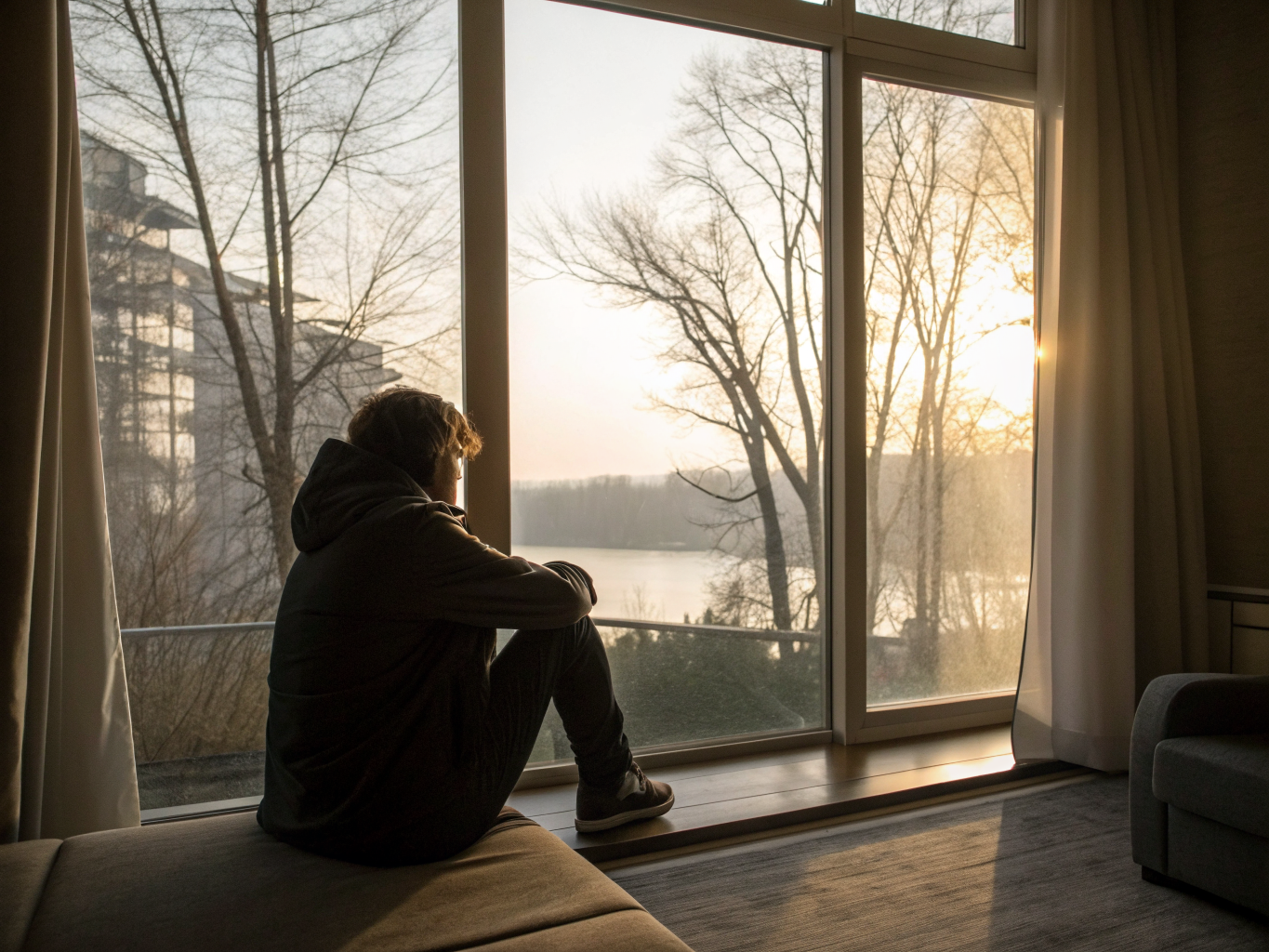
The patterns underneath burnout
Burnout is rarely just a capacity problem. Behind the depletion, there are usually patterns of thought and behaviour that made it possible to get there, and that tend to make genuine recovery harder.
Perfectionism is common. The high standard that once felt motivating can become a constant drain: no output is ever quite good enough, every task takes longer than it needs to, and the internal critic runs in the background of nearly everything. This creates a particular kind of exhaustion that is not primarily about the volume of work but about the relentlessness of the internal appraisal. You can do less and still be just as depleted.
People pleasing is another pattern that appears frequently. If saying no reliably triggers anxiety, or if your sense of security in a relationship depends on being seen as accommodating and capable, you will consistently take on more than is sustainable. Not because you lack self-awareness, but because the alternative feels more immediately threatening than the overload.
There is also often a deeper question underneath: what am I, if I am not productive? For many high-achievers, worth has been accumulated through performance since an early age. Rest does not feel restorative; it feels exposing. The idea of producing less, even temporarily, carries an anxiety that is disproportionate to the practical consequences. Work anxiety of this kind sits at the root of many burnout cycles, and it is worth distinguishing from the burnout itself, since they often require different things.
Understanding these patterns is not about finding somewhere to place blame. It is about seeing what has been sustaining the problem, so that recovery can address those things directly rather than managing around them.
What actually helps
Rest is necessary. It is not optional. But rest alone is rarely sufficient. Many people who take extended time off return to work and burn out again within months. This is not because rest is the wrong idea. It is because rest addresses the symptom without touching the conditions that created it.
What tends to be more effective is a process that works on several levels. Understanding what the burnout has been built on. Developing a genuinely different relationship with your own limits and needs, not just a strategic one. Working with both the mind and the body. Making practical changes that are sustainable rather than compensatory.
In therapy, this often means exploring the cognitive patterns that have made it difficult to slow down: the assumptions about worth, the stories about what happens if you stop, the fear of what other people will think. It also means working directly with the body's experience, because that is where much of the depletion is held, and where some of the most durable shifts tend to happen.
For a closer look at what this can involve, my post on CBT for workplace stress and burnout covers the cognitive dimension in more detail. The what to expect in therapy page covers the practical questions about what working together is actually like.
Frequently Asked Questions
What is the difference between burnout and depression?
They can look similar, and in some cases they overlap. The key distinction is that burnout tends to be contextual: symptoms often ease when the person is removed from the source of pressure, on a holiday or during a period of lower demand. Depression tends to be more pervasive, colouring everything regardless of context. That said, burnout that goes unaddressed for long enough can develop into clinical depression, which is one reason it is worth taking seriously rather than waiting for it to resolve.
Can you burn out from something other than work?
Yes. Burnout can develop from caregiving, parenting, sustained emotional labour in relationships, or any situation involving prolonged high demand with insufficient recovery. The term is used most often in a professional context, but the underlying pattern, chronic depletion, emotional exhaustion, loss of engagement, is not exclusive to work. Many people experience burnout that has nothing to do with a job.
How long does it take to recover from burnout?
There is no reliable universal answer, because recovery depends on how long the burnout has been developing, what the underlying patterns are, and what kind of support is available. Burnout caught relatively early, in someone whose patterns are not deeply entrenched, may shift significantly within a few months. More established burnout, particularly when it is connected to deeper questions of identity and worth, tends to require sustained work over a longer period. Expecting a quick fix is often part of the same pattern that produced the burnout in the first place.
Is it possible to burn out even if I enjoy my work?
Frequently, yes. Some of the most significant burnout occurs in people who are deeply engaged with their work, because that engagement makes it much harder to stop. The things that make work meaningful, caring about outcomes, wanting to do things well, feeling a sense of responsibility to others, are precisely the things that make it difficult to protect your own limits. Burnout is not evidence that you do not care about your work. It can be evidence that you have given it too much of yourself, for too long, without enough returning.
Should I see a GP or a therapist for burnout?
Both can be relevant. A GP can assess whether there is anything physical contributing to how you are feeling, and may be able to offer a referral or sign you off work if rest is needed. A therapist is more useful for addressing the psychological patterns that drove you into burnout and are likely to sustain it. The two are not mutually exclusive: medical support and therapeutic work often go alongside each other, particularly in more significant burnout.
When is therapy worth considering for burnout?
When the symptoms are persistent and not resolving with rest. When you have returned to burnout more than once. When you can see the pattern but cannot seem to change it. Therapy tends to be most useful when burnout is connected to deeper patterns around perfectionism, people pleasing, or identity, because those are not things a break from work can address. If the same cycle keeps repeating, that is usually a sign that the conditions producing it have not changed.
Burnout does not resolve itself by pushing harder, and it rarely resolves itself with rest alone. What tends to be most useful is understanding what made it possible to get there, what has been sustaining it, and what a different relationship with your work and yourself might actually look like. That is not a quick process. But it reaches somewhere more lasting than the next recovery period before the next burnout.
If you recognise yourself in this post and would like to explore whether therapy might help, I offer an initial consultation with no obligation. You can book a free consultation here, or read more about what to expect in therapy before getting in touch.